
Benefits of an Annual HVAC Maintenance Plan in 2026
What an Annual HVAC Maintenance Plan Actually Covers
An annual HVAC maintenance plan is a service agreement that bundles scheduled tune-ups, inspections, and member perks into one predictable yearly arrangement. We've watched homeowners ignore their systems for years and then pay for it in the middle of August. Here's what these plans include, what they're worth, and where they fall short.
A plan covers two things: the labor of preventative maintenance and the financial protection that comes with it. Everything else, from priority scheduling to parts discounts, is a variation on those two themes. Most homeowners never calculate whether the math works in their favor.
Key Takeaway
A maintenance plan is not insurance. It is a scheduled service agreement with member benefits attached. Understanding that distinction changes how you evaluate the cost.
What Is Included in an HVAC Tune-Up Visit
A standard tune-up covers a defined checklist of inspections, cleanings, and adjustments performed by a qualified technician. The exact scope varies by provider, but most plans follow a similar structure.
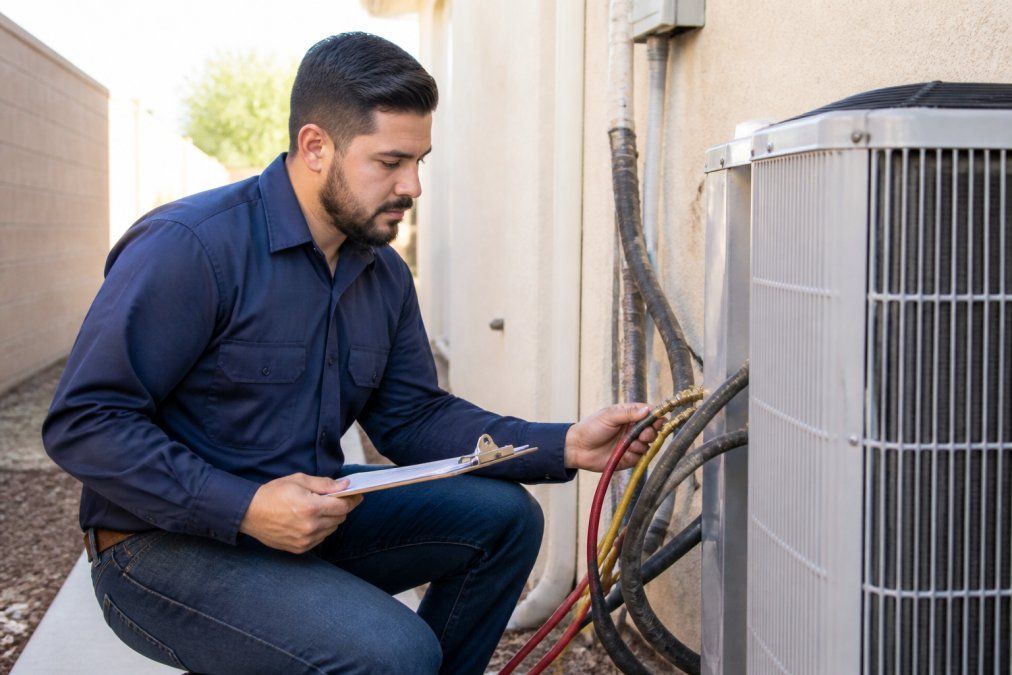
A friendly HVAC technician in uniform inspecting a residential air conditioning unit outdoors, holding a clipboard and checking refrigerant lines on a sunny day
Typical tasks include:
- Filter replacement or inspection to maintain airflow and system efficiency
- Refrigerant level check to catch slow leaks before they cause compressor damage
- Coil cleaning on both evaporator and condenser coils
- Electrical connection tightening to reduce fire risk and voltage drop
- Thermostat calibration so your system responds accurately to settings
- Condensate drain clearing to prevent water damage and humidity problems
What most guides miss: tune-up quality depends almost entirely on the technician, not the checklist. A rushed visit that skips coil cleaning is worse than no visit, because it creates a false sense of security.
Benefit 1: Lower Energy Consumption and Smaller Utility Bills
A well-maintained system uses less energy for the same comfort level. Let's go deeper: where the losses come from, and how a tune-up reverses them.
An HVAC system loses efficiency through four measurable pathways, and each one is addressed by a specific tune-up task:
- Restricted airflow, a loaded filter or dirty blower wheel forces the blower motor to draw more amps for the same cubic feet per minute (CFM). The motor runs hotter and longer, and the compressor sees higher return-air temperatures. Filter replacement and blower cleaning restore design airflow.
- Heat-transfer loss at the coils, a fouled condenser coil insulates the refrigerant from outdoor air, raising condensing temperature and head pressure. The compressor works harder per ton of cooling. Coil cleaning directly lowers that pressure.
- Refrigerant charge drift, a system that is 10% undercharged or overcharged loses capacity and efficiency. A technician verifies superheat and subcooling against the manufacturer's charging chart rather than guessing by gauge pressure alone.
- Electrical resistance, loose lugs and pitted contactor points add voltage drop, which the compressor and fan motors convert into heat instead of motion. Tightening connections and inspecting the contactor removes that parasitic load.
What does that translate to on a bill? Savings depend on how far out of spec the system has drifted. A system with a matted condenser coil and clogged filter is leaving far more on the table than one serviced last spring. The largest single-year efficiency gains come from the first tune-up after long neglect, when the biggest deficits get corrected. After that, maintenance holds the line rather than recovering lost ground.
This is where the cost-benefit conversation starts. If utility bills spike every summer, the cause is often maintenance rather than an equipment limitation. A technician can identify whether your system is underperforming or undersized by comparing measured airflow and refrigerant pressures against the manufacturer's rated specifications.
Watch Out
Skipping a tune-up because "it's running fine" is a common mistake. HVAC components degrade gradually, and the system compensates until it can't. By the time you notice, you're often facing a repair rather than an adjustment.
One more mechanism: an oversized system short-cycles, never running long enough to dehumidify properly. That shows up as a clammy house and higher effective cooling load, not a dramatic bill spike. Maintenance can't fix an oversized system, but a technician can flag it so you're not paying for tune-ups on equipment that will never perform to spec.
Benefit 2: Longer Equipment Longevity and Fewer Emergency Repairs
Regular preventative maintenance extends HVAC lifespan by catching small problems before they become failures. The difference between a 12-year and a 20-year system is usually maintenance history, not brand.
Emergency calls are expensive because they happen during a heat wave or cold snap, when demand is highest and scheduling tightest. A maintenance plan shifts that dynamic: you address wear on your schedule rather than reacting to a breakdown.
Longevity also depends on installation quality and how hard the system runs. A technician tracking performance year over year can spot trends, like rising compressor amp draw, that a one-time inspection would miss.
Benefit 3: Priority Scheduling and Discounted Parts and Labor
Priority scheduling and repair discounts are the two member benefits homeowners actually feel. When your AC fails in July, plan members typically move to the front of the queue.
Discounted parts and labor vary by provider and tier. Some offer a flat percentage off repairs; others bundle a set number of service calls. The value depends on how often you need repairs, which is why a cost-benefit analysis matters more than the marketing brochure.
| Plan Feature | Typical Benefit | Who It Helps Most |
|---|---|---|
| Priority scheduling | Front-of-queue during peak season | Homeowners in extreme climates |
| Parts discount | Percentage off replacement components | Systems over 10 years old |
| Labor discount | Reduced hourly rate for repairs | Frequent repair users |
| Annual tune-up | One or two scheduled visits | Everyone with a system under warranty |
Coming from a no-plan approach, expect the first year to feel like a reset: the technician establishes a baseline, and hidden issues may surface.
Benefit 4: Better Indoor Air Quality and Manufacturer Warranty Protection
Indoor air quality improves when your system is clean and running correctly: it filters better, circulates air more evenly, and controls humidity more effectively.
Manufacturer warranty protection is the most overlooked benefit. Most manufacturers require documented annual maintenance to keep the warranty valid. Miss those appointments, and a covered compressor failure becomes your expense.
According to the U.S. Department of Energy's guidance on home heating and cooling, regular maintenance is one of the most effective ways to keep a system operating at its rated efficiency. The U.S. Environmental Protection Agency's indoor air quality resources also note that proper ventilation and filtration play a direct role in home air quality.
Pro Tip
Keep every maintenance invoice and technician report in one folder. If you ever file a warranty claim, the manufacturer will ask for proof of service, and a stack of dated receipts settles the question immediately.
How Often to Replace HVAC Filters (And Why It Matters)
Filter replacement frequency depends on filter type, home environment, and usage. A common guideline is every 1 to 3 months for standard filters, but that range narrows based on your situation (energy.gov).
- Standard 1-inch fiberglass filters: every 30 days during peak season
- Pleated filters: every 60 to 90 days
- High-efficiency filters: every 3 to 6 months, depending on thickness
- Homes with pets or allergy sufferers: replace more frequently than the baseline
A clogged filter restricts airflow, driving up energy consumption and stressing the blower motor. It's the cheapest maintenance item with the most immediate impact, many homeowners who think they need a repair simply need a new filter.
Is an Annual HVAC Maintenance Plan Worth the Cost? A Cost-Benefit Analysis
An annual HVAC maintenance plan is worth it when the combined value of tune-ups, priority scheduling, and repair discounts exceeds the annual fee for your usage pattern. Here's how to run the numbers, plus the contract terms that quietly change the answer.
Step 1: Price the tune-ups you would buy anyway
Start with the standalone cost of the bundled visits. A single residential tune-up typically runs in the low hundreds of dollars, so a two-visit plan is effectively selling two tune-ups plus perks. If the fee is close to the price of two standalone tune-ups, the perks are the real product. If it's well above, you're paying a premium for priority access and discounts.
Step 2: Estimate your realistic repair exposure
Look at your last three years of service records and add up actual repair spending. Apply the plan's stated parts and labor discount to that figure. If you spent nothing on repairs in three years, the discount is worth nothing this year, plans are not a universal win.
Step 3: Value the priority scheduling honestly
Priority scheduling has real value, but only if you would otherwise wait. In a peak-season breakdown, the member-versus-non-member difference is often measured in days, not hours. With a second system, window unit, or tolerant household, that value drops. With infants, elderly residents, or medical equipment, it rises sharply.
Step 4: Compare the total against the fee
- Add up the cost of two standalone tune-ups per year
- Estimate your average annual repair spending over the last three years
- Apply the plan's parts and labor discount to that repair figure
- Add a value estimate for priority scheduling during peak season
- Compare the total against the annual plan fee
If the plan fee is lower than your combined estimate, it's a reasonable buy. If you rarely call for service and your system is new, a plan is more about convenience than savings.
Red flags to read for before you sign
This is the part most guides skip, and it is where homeowners get burned:
- Auto-renewal with a narrow cancellation window. Many contracts renew automatically and only allow cancellation in a short window before the renewal date. Miss the window and you have bought another year.
- Non-transferable clauses. If you sell the home mid-term, a non-transferable plan dies with the sale. A transferable plan becomes a small selling point.
- Exclusions on the expensive components. Read the fine print for what is not covered. A plan that excludes the compressor, the blower motor, or the heat exchanger is protecting the cheap parts and leaving you exposed on the costly ones.
- Vague "inspection" language. If the contract says "inspect" rather than "clean and adjust," a technician can satisfy it with a visual glance. Look for the specific tasks, coil cleaning, refrigerant charge verification, condensate drain clearing, spelled out in writing.
- Trip fees buried in the perks. Some plans waive the diagnostic fee but add a trip charge, which nets out to roughly the same cost.
DIY vs. professional: where the line actually sits
DIY maintenance has a role, and being clear about it makes the plan's value easier to judge. Changing filters, clearing debris around the outdoor unit, keeping vents unobstructed, and hosing off the condenser coil from outside are reasonable homeowner tasks. Anything involving refrigerant handling, electrical diagnostics inside the cabinet, gas-side furnace inspection, or opening the refrigerant circuit requires a licensed technician, in many jurisdictions, handling refrigerant without certification is illegal. Routine housekeeping is yours; refrigerant or electrical panel work is not.
The resale angle
Resale value is the quiet benefit competitors rarely quantify. A documented maintenance history signals the home was cared for. When an inspector flags a 12-year-old system with no service records, that becomes a negotiation point; a folder of dated invoices turns the same system into a documented asset. If you're within a few years of selling, that alone can justify the plan.
Watch Out
Watch for red flags in any service contract: vague cancellation terms, auto-renewal clauses buried in fine print, and plans that exclude the specific components most likely to fail. A plan that doesn't cover your compressor or blower motor isn't protecting the expensive parts.
For homeowners in Santa Clarita and the surrounding communities, Stay Cool Air Conditioning & Heating Inc. offers maintenance services backed by over 25 years of industry experience and a 5-star Google rating. As a family-owned and operated business, we focus on honest assessments and system tune-ups that keep units running smoothly, whether you need routine seasonal maintenance or an emergency repair.